


📚 How serial prose turns readers into book buyers
Serial fiction has stopped being a literary curiosity and has become a way to build an audience long before a manuscript turns into a book. For those who are also looking for external venues to announce their series, a guest post exchange service can help, but the real work is still done by the release rhythm of the episodes. Below we will look at how the path from the first free chapter to a sold print run works, and where that path most often breaks.
How to take an episode reader all the way to buying the book
A serial works as a funnel with three levels: a free entry point, a habit of returning, and a paid exit in the form of a volume. The route below is repeated by authors whose episodes actually convert into sales rather than remaining an archive of free text.
💡 Quick overview:
- Step 1: Choose a story arc that comes together as one complete volume.
- Step 2: Lock in the day your episode comes out and do not move it: the schedule matters more than the length.
- Step 3: Give away the first episodes for free to gather your first readers and first feedback.
- Step 4: From the very first release, direct the audience to your own newsletter, not just to your profile on the platform.
- Step 5: Assemble the completed arc into a book and add what was not on the web: a prologue, a map, a bonus episode.
- Step 6: Launch the next arc on the day the book comes out, so new traffic lands directly in a living text.
Each step solves its own problem. The arc ensures the reader has something complete to buy. The schedule builds the habit. The newsletter ensures the audience survives the shutdown of any platform. The bonus material answers the inevitable question: why pay for what has already been read for free.
The book market grows slowly, while attention shifts quickly
The illusion that "serials are stealing readers from books" falls apart against industry numbers. According to the annual report from the Association of American Publishers, total US publisher revenue for the 2025 calendar year reached 33.4 billion dollars, and the consumer segment grew 2.7 percent to 21.7 billion. Within it, adult fiction added 3.9 percent and reached 7.1 billion dollars. The book has not gone anywhere; only the entry point into it has changed.
Another detail from the same report matters directly to serial authors: AAP data on formats shows that print still accounts for 76.3 percent of consumer segment revenue. A reader who discovers a story on screen leaves their money in paper. That is exactly why a web serial should be viewed not as a competitor to the book, but as its storefront: the screen handles acquisition, print handles monetization.
Industry observers read the same statistics more cautiously. Publishing Perspectives notes that revenue growth turned out to be modest, which means the fight is not for expanding the market, but for redistributing already existing demand. For an independent author, this is good news: the winner is not the one with the bigger budget, but the one with more regular contact with readers.
Three ways to earn from episodes, and the risk each one carries
Serial monetization comes down to three basic models, and you have to choose between them deliberately, because their risks are fundamentally different.
Model | How it works | Main risk |
|---|---|---|
Platform-based | episodes are sold inside the service for internal currency or under a subscription | the rules and the service itself may disappear, and the audience stays with the platform |
Subscription | the reader pays the author directly for access to the episode feed | income depends on discipline; missing releases immediately drives churn |
Storefront | the serial is free, and the collected book brings in the money | a long ramp-up; the first months run at zero |
The scale of the platform model is impressive. The official Wattpad blog reports more than 90 million people monthly and roughly 23 billion minutes of reading per month. That reach provides something that is almost impossible to achieve on your own: a live stream of random readers who find you without advertising.
The subscription model has strengthened in recent years. A summary of Substack statistics records 8.4 million paid subscriptions as of the first quarter of 2026 and about 100 thousand publications earning on the platform as of April 2026, whereas in May 2025 there were half as many such publications. Separately, The Hollywood Reporter writes that paid subscriptions among British authors alone have passed half a million. Direct payment to the author has become the norm, not an experiment.

The storefront model looks the most boring and yet remains the most durable. It depends neither on a platform's algorithm nor on its business plans, and a completed arc keeps selling for years, as long as the book itself lives.
The Kindle Vella lesson: someone else's platform is not your asset
The best real-world case on this topic was provided by Amazon itself. The Kindle Vella service launched in 2021 as a separate storefront for episodic fiction with token-based payment. Engadget reported the service's shutdown: the platform ceased operations on February 26, 2025. The GeekWire piece quotes the company's wording that the format did not catch on the way they had expected.
The practical consequences were described by industry consultant Jane Friedman. Her breakdown of the Vella shutdown explains the key point: authors lost not only a sales channel, but also the accumulated visibility inside the catalog, because ratings, bookmarks, and story subscriptions lived inside the service and could not be transferred anywhere. Those who survived were the ones who had been collecting readers into an external list all along.
From this comes a simple working rule: the platform is responsible for the introduction, the author is responsible for the relationship. Every episode should contain an unobtrusive invitation to a place where the connection with the reader does not depend on someone else's decision. That could be a newsletter, a private chat, or a page for the series on your own site, but the contact must be yours.
The economics of a single episode: length, rhythm, and the assembly point
Beginning serial authors most often make mistakes in two areas: they write episodes that are too long and promise a schedule that is too dense. Both decisions look generous, but they work against the author, because reader habit is built on predictability, not on volume.
Format | Reasonable episode length | Rhythm | What sells at the end |
|---|---|---|---|
Web serial on a platform | 1,500 to 2,500 words, one read per sitting | weekly | a print collection of the arc |
Author newsletter | 2,000 to 3,000 words with a personal note | every two weeks | the volume plus an expanded edition |
Seasonal cycle | a short episode, but a complete season | a season of 10 or 12 releases | a box set of several seasons |
The numbers in the table should be taken as a working guideline, not as a law of the genre. The principle matters more: an episode should be readable in one sitting, on the go or before bed, and it should end in a way that makes the reader mentally set a reminder for the next week.
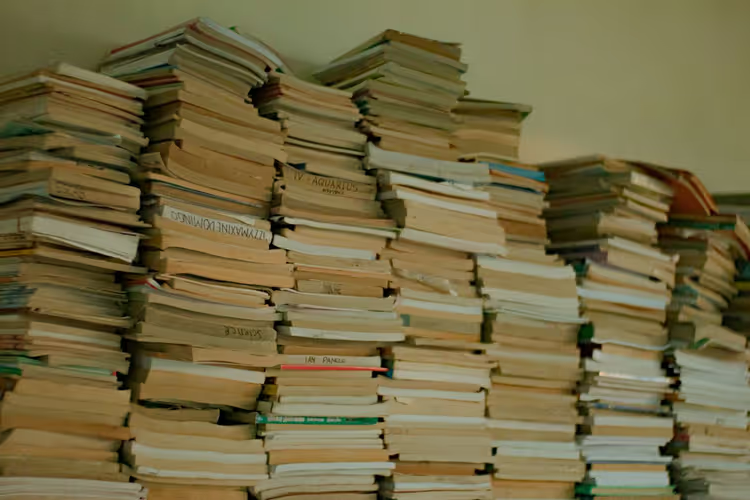
The assembly point deserves separate planning. The mistake looks like this: an author publishes forty episodes in a row and then tries to mechanically glue them into a volume. The result is a feed without a climax. It is better to map out in advance where the arc closes and to drive the narrative toward that ending as responsibly as toward the ending of a regular novel. Then assembly becomes editing, not a rescue operation.
Techniques that make readers finish the season
The serial form lives by its own dramatic laws, and they are closer to screenwriting than to novel writing. The first technique is obvious and therefore often executed poorly: the final hook of an episode should change the hero's situation, not simply cut a scene off mid-sentence. A cut-off phrase is annoying; a changed balance of power makes the reader wait.
The second technique concerns the entry point. A serial reader has a week between episodes and does not remember the details. The first few lines should gently restore context: where we are, who is here, and what is at stake. A good serial author rebuilds this support from scratch every time, without sliding into a recap of the previous installment.
The third technique is about promises. A serial accumulates open questions, and if none of them gets closed for a long time, trust erodes. An alternating rhythm works: each episode closes a small promise and opens a new one, while the major storyline moves slowly and closes at the end of the arc. It is this feeling of a fulfilled contract that later makes the reader pay for the volume.

The fourth technique is about voice. In a long serial, the reader becomes attached not only to the plot, but also to the narrator's tone. A sharp change of style mid-season feels like replacing the host of a podcast. If you want to experiment with form, there is the off-season or a separate side series for that.
And finally: a serial requires a buffer. Even the most disciplined author runs into a move, an illness, or a crunch at their day job. A few finished episodes in the buffer are worth more than a perfectly polished text released ten days late.
⁉️🤔 Frequently asked questions
How many episodes do you need to make a book?
Aim not for a number, but for the completeness of the arc. The reader pays for a whole story, not for volume, so it is better to assemble a compact but finished volume than a thick collection without a climax. If the arc cuts off in the middle of the conflict, put the assembly aside and write the ending before printing.
Don't free episodes kill book sales?
A free episode sells not the text, but the habit of returning. A reader who has come back to you for several weeks in a row buys the volume for convenience, design, and additional material. The problem appears only when the print version contains nothing at all beyond what was already read on the web.
Which platform should a beginner choose?
The one where your genre already lives, and at the same time the one from which you can lead readers into your own newsletter. A platform's audience belongs to the platform. The shutdown of Kindle Vella in February 2025 clearly showed that a catalog without an external contact list disappears along with the service.
How often should you release without burning out?
A rare but ironclad schedule works better than a frequent and erratic one. Reader habit is built on predictability: a missed week costs more than a shorter episode. Write with a buffer of at least a few finished releases, so everyday circumstances do not break the publication chain.
Does serialization work for nonfiction?
Yes, although the mechanics are different. Instead of a plot hook, cumulative value keeps readers engaged, and the role of the arc is played by a thematic cycle. The collected volume then sells as a reference book that is convenient to return to, and that is a separate value compared with a feed of individual posts.
Summary
Serial publication does not replace the book and does not cancel its economics. Industry statistics show steady demand for print, and stories like the Kindle Vella shutdown remind us that someone else's storefront is always temporary. The combination that works: episodes bring the reader in, the newsletter keeps them, and the assembled arc turns attention into a sale.
Start with one arc that you will definitely carry through to the ending, and with a schedule you can sustain in a bad month, not only in a good one. Pick a day of the week, write three episodes as a buffer, and publish the first one. If the topic of self-publishing and author marketing interests you, take a look at other blog posts on book promotion and working with a reader audience: they cover adjacent tools that fit well with the serial format.

A professional team of writers and editors specializing in creating quality content.