


 AIIllustrative image: AI-generated
🎙️ Podcasts for authors: a source of inspiration and your own platform
Why authors should listen to and launch podcasts
Podcasts have stopped being a niche format and turned into a mass channel that a writer can use both for inspiration and for promotion. According to Edison Research, The Podcast Consumer 2025, 55% of Americans aged 12 and older listened to a podcast in the past month, and 40% listened in the past week. This is an audience accustomed to consuming long audio content and happy to subscribe to a voice it trusts. For an author, that means two things: a free stream of ideas in your headphones and your own platform where the book sells itself through live conversation.
💡 Quick overview: a podcast for an author works in two modes. The first mode is a source of inspiration, when you listen to other people's stories and craft breakdowns. The second mode is a platform tool, when you launch your own show and build a loyal readership. To get value from both, follow these steps:
- Pick 3 to 5 regular shows in your niche and listen to them in the background.
- Take notes: capture ideas, quotes, and techniques while you listen.
- Decide on your own podcast format: solo, interview, or narrative story.
- Assemble a minimal setup: a USB microphone and a free editor.
- Publish episodes on a schedule and promote them through your newsletter and social media.
Why podcasts became a powerful channel for writers
The main reason for the growth is accessibility. You can listen to a podcast while driving, on a run, or during chores without stopping what you are doing. According to Edison Research, since 2015 total podcast listening time in the US has grown by 355% and reached 773 million hours per week. That points to a habit firmly embedded in the daily lives of millions of people.
The scale is impressive too. Backlinko estimates that in 2026 there are about 619.2 million podcast listeners worldwide, with roughly 7 million individual shows available on Spotify. For an author, that means almost any topic, from dark fantasy to nonfiction about productivity, already has a ready and interested audience.
The video format is growing as well. The same Edison Research report notes that 51% of Americans aged 12 and older have watched a video podcast at least once, and 37% did so in the past month. That is an important signal: the author's voice is increasingly accompanied by a face and a setting, which strengthens trust and personal connection with the reader. A video version brings another bonus: the episode can be posted on YouTube and build a separate audience there, which then turns into subscribers of the audio version and into book buyers.

Podcast as a source of inspiration
Listening to podcasts deliberately is a skill in itself. Many authors put on a show in the background and forget everything they heard. To turn listening into fuel for your writing, treat it like reading with a pencil in hand.
Keep a notebook or notes app nearby and capture three types of finds: an idea for a plot or article, a precise phrase that hooked you, and a specific craft technique. A single interview episode with a writer can give you the scene your novel was missing. A breakdown of detective story structure can show you how to sustain tension in your own chapter.
Match shows to your goal. If you write nonfiction, look for podcasts about your subject area and about book marketing. If you work on fiction, listen to interviews with authors about process and failures, because it is the candid confessions about creative blocks that give the most energy. Five regular shows in rotation create a steady flow of fresh angles and keep the creative well from running dry.
How to choose the right podcast to listen to
Your choice of show determines how much value you get. Chaotically subscribing to dozens of podcasts leads to finishing none of them. It is better to select a few and listen to them systematically.
Selection criterion | What to look for |
|---|---|
Content | Does the topic match your niche and creative goals? |
Host | Is the style and pace comfortable for long listening? |
Release frequency | Do episodes come out regularly, without long gaps? |
Depth | Are specific techniques discussed or only generalities? |
Reviews | What do listeners say in Apple Podcasts and Spotify ratings? |
Listen to two or three episodes before subscribing. The first release is often weaker than the rest, so judge by the middle of the catalog. Pay attention to length: half-hour formats are easier to fit into a day than three-hour marathons you will keep putting off. Sound quality is secondary, since even a modest microphone does not get in the way of a deep conversation.
How to create your own podcast: a step-by-step plan
Launching a podcast has become technically simple. According to Buzzsprout, most beginners only need a USB microphone and a free editor to release their first episode. The video below breaks down a basic beginner setup, from the first microphone to publishing.
Step 1: choose a topic and format
A narrow topic builds a more loyal audience than a vague one. Instead of a "podcast about books," make a show about how fantasy is written, or about marketing for self-published authors. Decide on the format: solo monologue, guest interviews, or narrative story. Solo is easier to produce, while interviews grow the audience faster thanks to guests.
Step 2: assemble equipment and software
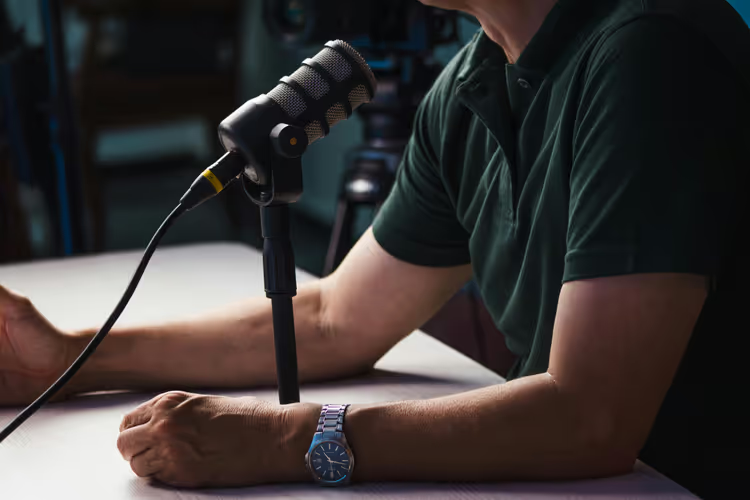
Start with an entry-level USB microphone and closed-back headphones. For recording and editing, free Audacity on Windows or GarageBand on Mac will do. Record in a quiet room with soft furniture, because it dampens echo better than any processing. Investing in expensive sound makes sense later, once the format is established and starts paying off.
Step 3: record and edit the first episode
Do not chase perfection in the first release. Record a short intro, the main section, and a call to subscribe. Edit out pauses and slips, level the volume, and export the file. A few takes at the start is normal practice, and by the third attempt your voice sounds more confident.
Step 4: publish and set a schedule
Upload the episode to a hosting service that distributes the RSS feed to Apple Podcasts, Spotify, and Google. Choose a realistic publishing rhythm, for example one episode every two weeks, and stick to it. According to Riverside, irregularity is what kills young shows most often, not sound quality.
How a podcast strengthens a book career
Your own show gives you a direct channel to readers with no middlemen. A listener who has spent dozens of hours with your voice buys the book almost automatically, because there is already trust between you that no ad banner can build.
A podcast also opens doors for collaborations. By inviting other authors on air, you reach their audience too, because the guest shares the episode with their followers. That is how cross-promotion works with zero ad budget. Many writers note that regularly appearing on other podcasts as a guest raises recognition and boosts backlist sales.
A real example of the scale of influence is the podcast "Writing Excuses," hosted by professional writers Brandon Sanderson, Mary Robinette Kowal, and their colleagues. The show has been running since 2008 with short fifteen-minute episodes and has become one of the main craft schools for English-speaking authors, winning a Hugo Award. It shows that a niche podcast about writing can build a devoted international community and become a standalone brand that works for the author for years.
Common mistakes of beginner podcasters
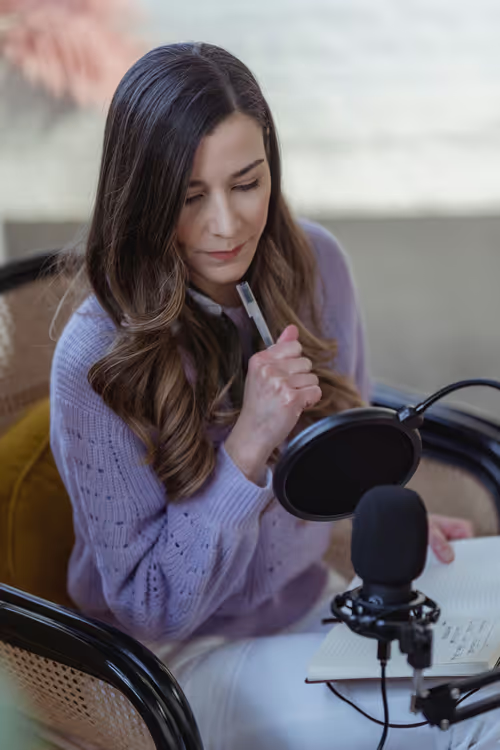
The first mistake is perfectionism at the start. Authors spend months polishing a logo and intro instead of releasing an episode and collecting feedback. The audience forgives rough sound, but it does not forgive silence.
The second mistake is a topic that is too broad. A show "about everything for writers" loses to a narrow one "about fantasy editing," because it does not give the listener a clear promise. The third mistake is the absence of a call to action: if you do not ask people to subscribe, leave a review, or visit your site, the listener leaves without a trace.
The fourth mistake is ignoring the schedule. One episode per month on a schedule works better than three in a row followed by six months of silence. Regularity is what algorithms and listeners value above all. The fifth mistake is recording overly long episodes at the start, when holding attention is still hard.
⁉️🤔 Common questions about podcasts for authors
How many podcasts should an author listen to regularly?
The optimal number is three to five shows in rotation for your niche. Fewer, and the flow of ideas dries up; more, and you stop finishing episodes. Choose a mix of shows about craft, book marketing, and author interviews so you get techniques, inspiration, and business insights in a single listening cycle.
Do you need expensive equipment to launch your own podcast?
No, expensive equipment is not necessary. To start, an entry-level USB microphone, closed-back headphones, and a free editor like Audacity or GarageBand are enough. Topic quality and release regularity matter more than studio sound. Investing in a professional microphone and acoustic treatment makes sense later, once the format is established and the audience has started growing.
Which podcast format is better for a writer, solo or interview?
The solo format is easier to produce and fully under your control, but it grows the audience more slowly. Interviews require more organization, but each guest brings their own followers. Many authors start with solo to learn the process, then add interviews to expand reach and network within the writing community.
How often should you release episodes to keep listeners?
The main rule is regularity, not frequency. One release every two weeks on a clear schedule works better than chaotic publishing. According to industry guides, irregularity, not sound quality, is what most often causes young shows to fade. Choose a realistic rhythm and stick to it for at least six months.
Does a podcast help sell books?
Yes, a podcast helps sell books, but not directly through advertising; it works through trust. A listener who has spent dozens of hours with your voice is more willing to buy the book and recommend it to friends. An additional effect comes from appearing on other podcasts as a guest: you reach a new audience and raise recognition, which boosts sales of your entire catalog.
Conclusion
Podcasts give an author a rare combination: an endless source of ideas and a personal stage for conversation with the reader. To get value, listen systematically and take notes, and if you decide to start your own project, begin small, choose a narrow topic, and publish on a schedule. Do not wait for the perfect microphone and the perfect script, because the first episode matters more than any equipment. The format's audience is already huge and keeps growing, which means the window of opportunity is open right now for every author ready to speak out loud.
Ready to find fresh ideas and a platform for your voice? Discover new sources of inspiration for your writing on this platform.

A professional team of writers and editors specializing in creating quality content.